Thursday, December 22, 2011

The Protestant Mary


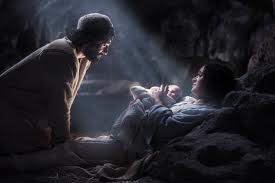
As a Protestant believer, I am always a little uncomfortable with how to talk about Mary, the mother of our Lord, who stands at the center of the Christmas story. One of the dividing issues between Catholic/Orthodox Christians and Protestants is how we treat Mary.

I must confess that I love the Ave Maria by Franz Schubert. I consider it one of the most perfectly constructed songs that I know. Yet, I feel a little guilty about listening to it because the words are the "Hail Mary..." prayer that Catholics use when reciting the Rosary--in Latin.

The tendency to venerate Mary began very early in the church with the veneration of martyrs who were said to be "already in God's presence and glorious in His sight" (Early Christian Doctrines, J. N. D. Kelly, p. 490). Mary eventually was compared to Eve, "the mother of all living" (Gen. 3: 20), and was viewed as the proper owner of that title. The problem of how she could bear the sinless Son of God led to the belief that she herself was sinless. Eventually this led to the belief that she was born without sin (immaculate conception). In addition, there was a belief that she remained perpetually a virgin. Jesus' brothers and sisters were said to either be Joseph's children by another marriage or cousins.

An important controversy in the 5th century led to the rejection of Nestorius who claimed that Mary could be called Christotokos (Christ-bearer), but not Theotokos (God-bearer). This was rejected on Christological grounds: Jesus was fully human and divine and to separate the two is to argue for two persons. But inherent in the controversy was the growing tendency towards the worship of Mary as the Mother of God.

Protestantism was marked with the doctrine of sola scriptura by Martin Luther, who wanted to get back to the basic Christianity of the apostles and strip away the unbiblical beliefs and practices that had gathered like barnacles on the hull of the ship. But in doing so, we may have lost the wonder of the miracle of Jesus' birth and the incredible example of Mary, a holy and faithful believer who taught us all what it means to be obedient to God in the face of all opposition.

The angel brings incredible news with the greeting: "Greetings, you who are highly favored! The Lord is with you" (Luke 1: 28).

After struggling with the incredible news, Mary, in perhaps one of the greatest examples of humble submission to the will of God says, "I am the Lord's servant...May it be to me as you have said" (vs. 38).

I believe it is wrong of us to disregard Mary. And we can learn much from her without having to exalt her to demigod status. After all, even Mary herself, in her great hymn of praise (known as The Magnificat) said: "For he has been mindful of the humble state of his servant. From now on all generations will call me blessed" (vs. 48).

And indeed we are all blessed by Mary's humble obedience to God over 2000 years ago.

Saturday, December 17, 2011

Learning From the Herdmans


Another favorite novella that I try to read every year is The Best Christmas Pageant Ever, by Barbara Robinson. I have even read it aloud to a couple of groups. It was a made-for-TV special with Loretta Swit a couple of decades back and is available on DVD. But to get the full impact, read the book. It should take less than an hour to read--but is well worth it.

At the center of the book is another redemption story. The six Herdman children are the unredeemed rat-pack who terrorize any child who has the misfortune of attracting their attention.

Barbara writes the book from a terrorized little girl's perspective. When little brother Charlie is asked at church to share something he is thankful for at the Thanksgiving service, he shares, "There are no Herdmans." Although this is heartfelt, it strikes at the heart of the dilemma of church life. If we build a safe and loving environment where we can escape from the world, does that mean we exclude the Herdmans? Aren't the Herdmans exactly what the church is there for? As Karl Barth, the early 20th century theologian put it, church is "community for the sake of the world."

Of course, the Herdmans show up to church looking for free snacks. And when mom is stuck running the annual Christmas Pageant, put on by the Sunday School, the Herdmans take over all the important roles, including Imogene as Mary. The scandal of it all! A telephone whisper campaign begins, threatening to call off the pageant entirely. But of course, the play is staged with the Herdmans there to do their part.

But the book helps us to look at the Christmas story through the fresh eyes of the uninitiated. And it gives the congregation the same opportunity. And we get to witness the power of the story of God's entrance into our world, like a great tsunami, as it washes over and transforms the Herdman family.

Why not try reading the ancient story from Luke and Matthew as if it was the first time you had ever heard it? A poor young couple, clinging to their belief in God's word to them, in spite of the scorn of a skeptical world, face the desperate journey to Bethlehem. They camp out with the animals as Mary goes through labor and childbirth in very trying circumstances. Yet, God reveals himself via a host of angels to the local shepherds and then brings worshipers from exotic lands with extravagant gifts. The child, who outwardly looks like any other baby, is revealed to be special--in fact the unique Son of God Himself! God's ultimate gift to us.

And hear the shout of little Gladys Herdman, playing the Angel of the Lord, ringing in your head--"Hey! Unto you a child is born!"

Thursday, December 8, 2011

The Redemption of Scrooge


I absolutely love Charles Dickens' famous novella, A Christmas Carol. Besides owning several versions on DVD, I've re-read the book on my Kindle the last couple of Christmases. Perhaps my favorite is the TNT version with Patrick Stewart as Scrooge (although Michael Caine with the Muppets and songs by Paul Williams--and the made-for-TV George C. Scott--and the classic Alastair Sim versions are contenders).

Ebenezer Scrooge is ubiquitous at this time of year. And with all the versions out there, including derivations like Scrooged, it is evident that our society is in love with it as well.

What is it about this story that gives it such a pervasive appeal?

I believe that the key lies in the underlying theme of redemption. Most of us know hopelessly antagonistic materialists who seem impervious to the Gospel. For those who are most resistant to the message of God's love, deep in our hearts, we yearn to see them come to repentance.

J. R. R. Tolkein and C. S. Lewis tell us that the power of such fiction comes from the power of the true story it reveals. The truth is that the Gospel has power to save even the most hardened skeptic. That's why Paul says, "I am not ashamed of the Gospel, because it is the power of God for the salvation of everyone who believes..." (Rom. 1: 16).

At this time of year, our society is especially open to the wonder of God's love, expressed through his incarnation as a tiny baby, destined to die for the sins of the world. As Christians, let us not be ashamed of the Gospel.

And one more thing. If Scrooge can be redeemed, then I have hope for myself as well. Living in this world can begin to harden my naturally materialistic heart. If the Christmas message can melt Ebenezer's heart, then perhaps I am a candidate as well. Why not let yourself melt a little this Christmas?

Wednesday, November 30, 2011

O Come, O Come, Emmanuel


John Mason Neale, in 1850, translated an ancient advent song (in Latin, "Veni Immanuel") into English to give us "O Come, O Come, Emmanuel." Although he took it from a French Franciscan nun's processional, used in Lisbon, Portugal--it
probably dates back to the 8th century as a chant. I still hear the haunting echo of it's ancient roots every time I sing it.

The song throbs with the messianic expectations found in Old Testament prophetic passages. A dark and lost world yearns for the hope of the coming deliverer.

The inspiration for the first verse is Isaiah 7:14, the sign of the son born to a virgin, to be called "Immanuel" which means literally "God is with us." Of course, in Matthew 1:23 we are told that the birth of Jesus is the direct fulfillment of this prophecy.

The second verse refers to the "rod of Jesse" which is the shoot or branch that will grow from Jesse's tribe, mentioned in Isaiah 11:1. The promised Messiah will come from David's house to reign over God's kingdom.

The third verse refers to the "dayspring," which is also part of Zechariah's prophecy in Luke 1:78. The Messiah's coming will be like the rising of the sun of righteousness prophesied in Malachi 4:2. The light of His coming will dispel all darkness and burn away all iniquity.

The fourth verse calls the Messiah, "the Key of David," a reference to Isa. 22:22, "what he opens no one can shut, and what he shuts no one can open." The Messiah will open the gates into God's eternal kingdom.

The final verse directly refers to Jesus as "Adonai" but in most modern versions "Wisdon from on High." The verse indicates that Jesus was the Lawgiver on Sinai. Revealing Him to be God Himself incarnate.

What a blessing that this wonderful Advent chant has been preserved for us to sing the ancient, wonderful and deep truths about the Messiah, whose incarnation we are preparing to celebrate in a few short weeks. Remember to meditate on him as you sing it:

"O come, O come Emmanuel; and ransom captive Israel that mourns in lonely exile here until the Son of God appears.

"Rejoice! Rejoice! Emmanuel shall come to thee, O Israel."

"O come, thou Rod of Jesse, free thine own from Satan's tyranny; from depths of hell thy people save, and give them vict'ry o'er the grave.

"O come, thou Dayspring, come and cheer our spirits by thine advent here; disperse the gloomy clouds of night, and death's dark shadows put to flight.

"O come, thou Key of David, come, and open wide our heavenly home; make safe the way that leads on high, and close the path to misery.

"O come, O come, Adonai [or-thou Wisdom from on high]; who in thy glorious majesty, from Sinai's mountain clothes in awe, gave thy folk the elder law."

Tuesday, November 22, 2011

Jesus Loves People


Jesus loves people. Everything he did points to this fact.

In Philippians 2: 5-8, Paul tells us that Jesus, although equal to God, rather than using his position to acquire more power for himself, poured himself out for us, becoming a human being. And not just any human, a humble and obedient servant. And not just any servant, but one who made the ultimate sacrifice of himself in the most shameful form of execution ever invented--crucifixion. Jesus' work of salvation was motivated by love.

Another way that Jesus demonstrated his love for people was through his healing ministry. The Gospel writers constantly tell us that Jesus was "moved with compassion" and then performed a miraculous healing. The underlying Greek word for compassion is powerful. It literally means "gut-wrenching." In other words, Jesus felt a deep pang of empathy in his bowels. That's why the KJV translates this as "bowels of mercy." Jesus' healing ministry was motivated by love.

Matthew tells us, "When he saw the crowds, he had compassion on them, because they were harassed and helpless, like sheep without a shepherd" (Matt: 9. 36). Jesus saw the crowds as disoriented, dejected, dispirited--like a flock of sheep without the guiding, protecting and providing presence of their shepherd. Love for people moved him with compassion.

So, what did Jesus' love motivate him to do this time?

Out of compassion, he authorized and empowered his twelve disciples to take on his own kingdom ministry and then sent them out, two-by-two, into the harvest field to extend his ministry (Matt. 10). And Luke tells us that he sent out 72 others as well, in order to extend his kingdom ministry even more.

Love motivated Jesus to send US into the harvest field as well. The book of Acts describes the sending out of the church to "Jerusalem, Judea, Samaria and the uttermost parts of the earth" (Acts 1: 8).

Jesus says in Matthew "The harvest is plentiful but the workers are few. Ask the Lord of the Harvest, therefore, to send out workers out into his harvest field (Matt. 9: 37-38).

Do you love people enough to be sent into the harvest field? Let us pray for the compassionate love of God for people to be poured into our hearts--and for God to send us.

Friday, November 18, 2011

Romance, Disillusionment, Joy


Last year I read an article in Time magazine on the results of a study of different professions in the USA. Surprisingly, the profession of "pastor" turns out to be one of the most stressful. Caring for people can be emotionally draining, especially with all the other hats we must wear (landlord, accountant, public relations, etc.). We want to nurture spiritual growth, but cannot help getting caught up in the drama of peoples' lives.

Pastoring is a difficult business. John Wimber used to say to pastor wanna-be's, "If you can do anything else, do it." Of course, the romantic view of pastoral ministry is hard to erase with a few simple words. A starry eyed romantic hears those words, but then thinks inside, "Yes, but I'm different."

Eugene Peterson, in his wonderful book, Under the Unpredictable Plant, says that so many of us in the pastoral ministry hear the call of God, like Jonah. The call sounds good as long as we are going to exotic Tarshish. Then we find out that ministry actually happens in messy, undesirable Ninevah.

Romance gives way to disillusionment. Or put another way, "reality bites."

The transition from journeying to Tarshish to actually doing ministry in Ninevah is hazardous to a pastor's own spiritual life. We must be wary of becoming cynical. Like Moses when he has gotten fed-up with Israel's complaining. Instead of simply speaking to the rock, he shows his frustration with Israel, "Listen, you rebels! Must we bring you water out of this rock?" (Num. 20: 10). Moses then, in complete disobedience to God's instructions, strikes the rock two times. The miracle happens and Israel's needs are met. But Moses never gets to enter the promised land.

The really difficult step we must make is to embrace ministry where it really is--in Ninevah. When we can actually accept that pastoral ministry is difficult and stressful, but IT IS WORTH IT--then we will begin to experience joy. The joy that comes, not because we have built a big cathedral, or have a big budget, or our attendance numbers are huge. The joy comes from being in the center of God's will.

Romance becomes disillusionment and finally turns to joy.

What's interesting is that, in that same Time article, pastoral ministry was rated highest in job satisfaction. Stressful--yes--but oh, so very worth it.

Wednesday, November 9, 2011

Christ as the Head of the Church

Several years ago, the senior pastor of the church at which I worked had to step down from his position. The resulting leadership vacuum was not instantly filled. The staff met almost daily, sometimes for half the day, to discuss decisions and what we needed to do to help the church function and go through the process of recovery. It became very clear to me how debilitating it was not to have a clear leader at the helm to steer the ship.

I must confess that during this interim period, I made some decisions and signed some approvals that no one had given me permission to do, but I knew that everything would grind to a halt if someone didn't keep the machinery greased. When the new senior pastor arrived, I gently let go of the power that I had temporarily (and benignly) assumed.

An old Latin proverb has often been quoted through the ages: "Power abhors a vacuum."

And yet, I am aware of several churches that have not only survived, but thrived under a kind of shared leadership. One person is the administrative elder, another the teaching elder, and another the pastoral care elder. By conventional wisdom, they should have crumbled or succumbed to a power-grab by someone. What makes them different?

I believe that, in their case, Jesus is the head of the church and they are all subject to his leadership. They are serving a greater vision that was planted in them when the church was founded and they are simply seeking to implement that vision under Christ's direction.

In Ephesians, Paul says that part of the maturing of the church is to begin to operate with Jesus as the Head. "From him, the whole body, joined and held together by every supporting ligament, grows and builds itself up in love, as each part does its work" (Eph. 4: 16).

A way I have often thought about this is that the church is the perpetual motion machine, defying the second law of thermodynamics (that all things tend towards disorder or decay). It works when two things are in place: 1) Christ is the head, and 2) love is the lubrication.

John Wimber, the founder of the Vineyard, used to share his conviction that Jesus wants to be the head of the Church.

To use the picture of vine and branches that Jesus gives us in John 15, "Apart from me, you can do nothing" (John 15: 5). Each of us, when we are vitally connected to the life-giving vine, will not only receive life from him but produce fruit.

Are we willing to get out of the way and let him lead us? Are we willing to let his leadership fill the power vacuum?